

What is market correlation, and how can cryptocurrency investors leverage cross-asset relationships to construct resilient, profitable portfolios? From Bitcoin’s gravitational pull on altcoins to macro couplings with the S&P 500 and the US Dollar, understanding correlation is vital. Here are the top 5 professional tips for mastering the crypto correlation strategy.
i Key Trading Takeaways
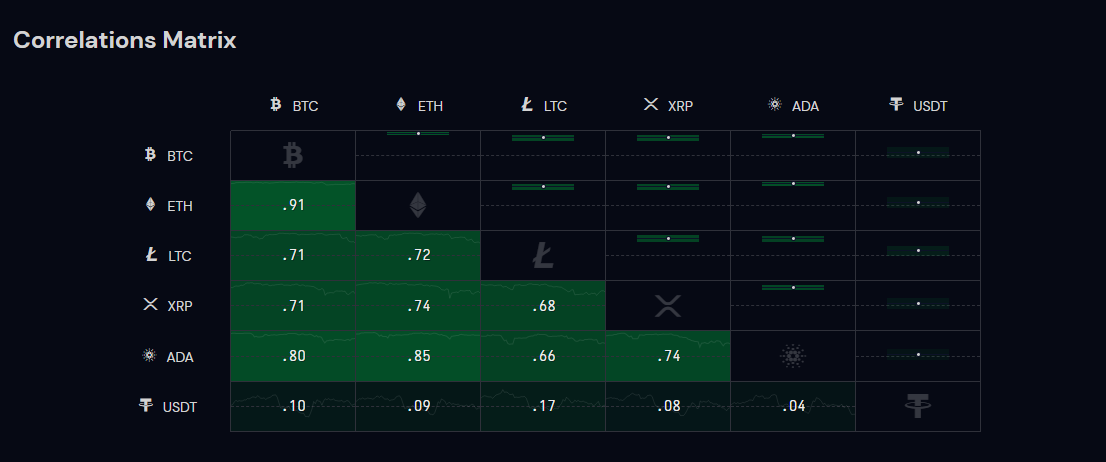
- Bitcoin Primacy: As the dominant digital asset with over 40%–55% market share, Bitcoin dictates broader market direction; altcoins move in tandem with high positive correlation coefficients.
- Macro Equities Coupling: Cryptocurrencies exhibit tightening correlation with benchmark equity indices like the S&P 500 and Nasdaq during liquidity-driven monetary cycles.
- Stablecoin Liquidity Clues: Expanding market caps of fiat-backed stablecoins (USDC/USDT) provide leading signals for upcoming capital rotation into risk assets.
- True Diversification: Avoid holding identical high-beta altcoins; construct multi-tiered portfolios balancing store-of-value, Layer-1 infrastructure, and cash hedges.
Understanding Correlation in Cryptocurrency Markets
In quantitative finance, correlation measures the statistical degree to which two assets move in relation to one another, expressed on a scale from +1.0 (perfect positive correlation) to -1.0 (perfect negative or inverse correlation). A reading of 0.0 signifies complete price independence.


Just as currency traders track the strong positive correlation between the Australian Dollar (AUD) and precious metals like gold, crypto traders must understand how inter-market dynamics drive digital asset valuations.
Top 5 Tips for Executing the Crypto Correlation Strategy
Tip 1: Anchor Market Bias to Bitcoin’s Price Action
Bitcoin (BTC) remains the undisputed flagship asset of the blockchain economy. Because institutional liquidity and derivatives open interest are heavily concentrated in BTC, its directional impulses ripple across the entire altcoin universe.
Execution Guideline:
Never open an aggressive long position on an altcoin while Bitcoin is breaking below key daily support. Even fundamentally strong tokens will succumb to broad liquidations during sharp BTC flash crashes. Use correlation metrics for higher-timeframe positioning rather than micro scalping.
Tip 2: Monitor Stablecoin Market Cap and US Dollar Flows
The vast majority of global crypto trading volume is denominated in US Dollar-pegged stablecoins like USDT and USDC. Consequently, the expansion or contraction of stablecoin supply acts as an authoritative proxy for available dry powder in the crypto ecosystem.
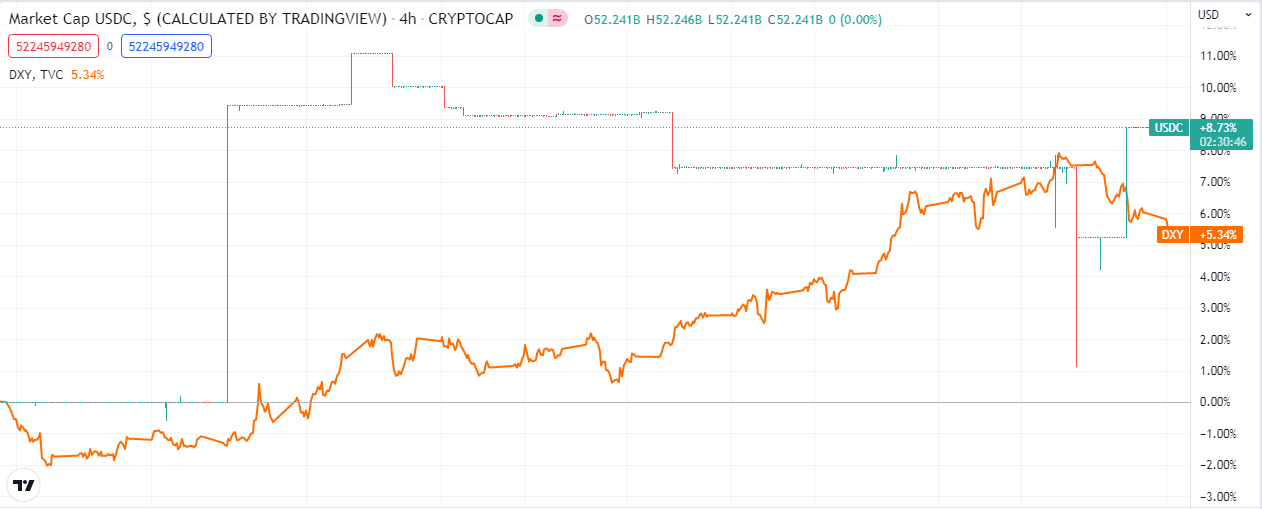
When stablecoin market capitalization expands consistently, fiat capital is entering the on-ramp gates, presaging a liquidity wave into spot crypto markets. Conversely, massive redemptions warn of risk-off de-leveraging.
Tip 3: Track the Macro Correlation with the S&P 500
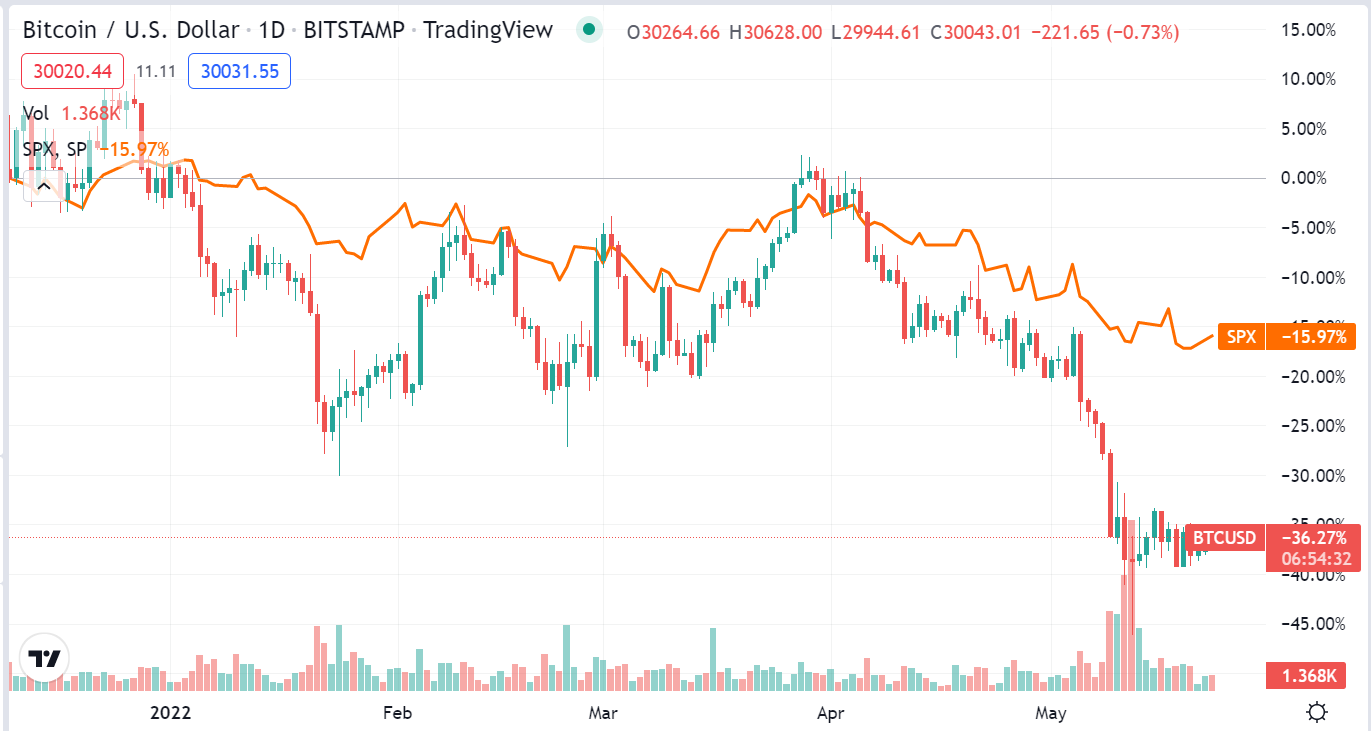
Cryptocurrency is no longer an isolated sandbox. With spot ETFs and Wall Street balance sheets actively participating, the 90-day correlation coefficient between Bitcoin and the benchmark S&P 500 index frequently climbs above +0.50.
Macro Awareness:
Macroeconomic catalysts—such as Federal Reserve rate announcements, US CPI inflation prints, and Treasury yield shifts—directly impact both stock indices and crypto valuations. Understanding equity sentiment provides traders with vital forward clarity.
Tip 4: Evaluate Ethereum and Ecosystem Token Dynamics
Ethereum (ETH) serves as the primary base settlement layer for thousands of decentralized finance (DeFi) protocols, decentralized applications (dApps), and tokenized assets. As user adoption, total value locked (TVL), and gas consumption grow, native demand for ETH expands proportionally.
When trading Layer-2 scaling solutions or ecosystem governance tokens, observe ETH’s structural health. If ETH is consolidating into a major breakout, secondary ecosystem tokens frequently experience magnified upside beta moves.
Tip 5: Achieve Genuine Portfolio Diversification
A classic beginner mistake is holding ten different altcoins and assuming the portfolio is diversified. If all ten assets have a +0.85 correlation with Bitcoin, a sudden market downturn will wipe out the entire account simultaneously.
The Golden Rule of Asset Allocation:
“Do not put all your eggs in one basket.” Allocate capital across non-identical asset classes: macro crypto reserve (BTC), smart contract platforms (ETH/SOL), tokenized real-world assets (RWAs), and cash/yield-bearing stablecoins.
Summary Matrix: Asset Correlation & Strategic Allocation
Conclusion
Correlation analysis is the linchpin of institutional risk management. By respecting Bitcoin’s directional influence, evaluating macro equity indicators, monitoring stablecoin reserves, and building authentic cross-asset diversification, investors can navigate crypto market cycles with superior risk-adjusted returns.