
Risk management is the key element of success in financial trading. Many crypto experts have already made millions of dollars from this market, although it is a new addition to the financial world. When we look for the reason behind their success, we find there is no Holy Grail. Their success came from choosing the right asset and holding it with proper risk management.
Most newbie crypto investors lose money by ignoring risk management, as the crypto market is volatile and carries risks like many other financial assets. The following sections discuss risk management practice in crypto trading and describe crypto swing trading strategies.
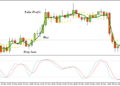
Risk management explained
The crypto marketplace is growing fast as blockchain technology booms. According to CoinMarketCap, the total market estimate in the first quarter of 2020 was only $160 billion, surpassing $1.3 trillion in Q2 2021. As the market grows rapidly, many people forget that it also involves risks alongside profits. It is therefore important to follow risk management rules if you don’t want to drain your capital in the first day or week after your deposit. A proper strategy helps decrease the risk of potential losses and enables bigger profits. The risk in crypto trading is the possibility of losing funds. Risk management in crypto trading therefore aims to control and predict possible losses from unsuccessful trades. Investors often draw similarities between cryptocurrencies and other financial assets regarding risk management.
Why use risk management in crypto swing trading?
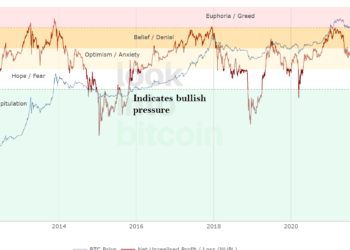
Like many other financial assets, risk management is an unavoidable part of crypto trading. For example, you may choose to invest in Ripple (XRP), one of the relatively strong and stable cryptocurrencies. It can still drop approximately 50%, as crypto assets are volatile, and the XRP historical price chart from the previous year shows many ups and downs.
In this case, you could lose approximately 50% of your deposit in a single losing trade. Although it is a dramatic example, many newbie crypto investors go through similar situations. The bottom line is the same: if you don’t follow specific risk management rules in crypto swing trading, you can lose a significant portion of your capital within a short period.
How to use risk management in crypto swing trading?
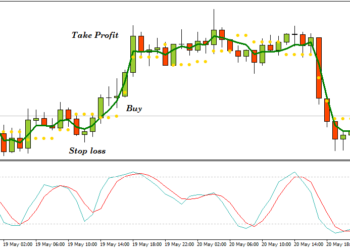
Follow some simple rules. The golden rule of crypto swing trading is never to risk more than you can afford to lose. Smart crypto swing traders always use appropriate stop-loss levels for each trade and decide on them before executing the trade, while making trading plans. Swing trading often requires holding positions overnight, so a stop loss is important to save capital while you are away from your computer. Risk management is mandatory to protect your account from being wiped out and to keep your losses manageable and small, so your gains can outnumber your losses over a particular period.
Risk management swing trading strategy
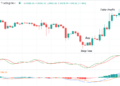
In this swing trading strategy, we use Bollinger Bands to find swing positions and the ADX indicator to confirm the trend’s strength before entering a trade. The method suggests swing trades when the Bollinger Bands contract, since a contraction increases the possibility of a swing breakout.
Crypto swing trading buy strategy
- The Bollinger Bands contract.
- The price moves above the middle band of the Bollinger Bands.
- The bands widen and a series of bullish candles appears.
- The ADX line rises above 25.
- Enter a buy trade.
- Place an initial stop loss below the current swing low.
- Never risk more than 2% of your capital on an open position.
- Exit the buy trade when the uptrend finishes: the price reaches the upper band or drops near the middle band after reaching that level, or the ADX reading drops below 25.
Crypto swing trading sell strategy
- The Bollinger Bands contract.
- The price moves below the middle band of the Bollinger Bands.
- The bands widen and a series of bearish candles appears.
- The ADX line rises above 25.
- Enter a sell trade.
- Place an initial stop loss above the current swing high.
- Never risk more than 2% of your capital on an open position.
- Exit the sell trade when the downtrend fades: the price reaches the lower band or rises to the middle band after reaching that level, or the ADX reading drops below 25.
Key takeaways
- Plan your trades: Always estimate your risk-reward ratio before entering any trade. Measuring stop-loss and take-profit levels is key, and successful traders know the price they are willing to pay and the price at which they will sell before they enter.
- Estimate your position size: Position size is the amount of crypto or tokens you are willing to buy. Choose it according to the risk you can afford, not the profit you hope for.
- Diversify or hedge: Don’t put all your eggs in one basket. Diversify your portfolio across different crypto assets rather than losing your capital in one trade.
- Practice or demo trade: The best way to master any trading strategy is to practice. You learn its potential, win ratio and risk factors by practicing more.
- Fees and costs: Crypto swing traders usually don’t trade frequently, entering only when price movement is in their favor. It is still mandatory to know the fees and costs involved in trades.
- Education: Successful crypto traders keep learning, so make time for education and use tools that help develop your knowledge of crypto trading.
Final thought
Swing trading is a profitable way to approach the crypto marketplace. Novice traders should practice any swing trading strategy before starting live trading with it. Once they nail the basics, it becomes easier to execute consistently profitable trades with that strategy.